






Writing

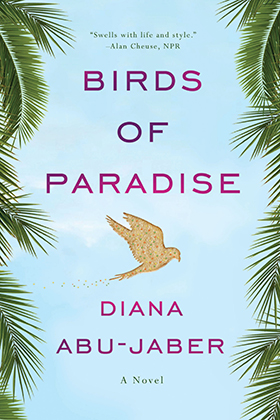
Birds of Paradise

A Novel

Reviews

After 13-year-old Felice Muir runs away from her Miami home in Diana Abu-Jaber’s new ­novel, Birds of Paradise (Norton), her ­mother, Avis, ­retreats to her kitchen, where she ­creates elaborate pastries as part therapy, part offering to her absent daughter. Felice’s father, Brian, buries himself in his lawyering and fantasizes about the young Cuban woman in the office next door, and her brother, Stanley, throws himself into the organic market he’s opened in lieu of going to college. They all vacillate between willing themselves to forget Felice and constant wondering—why she left, where she is, if she’s alive—until the approach of her eighteenth birthday and a storm named ­Katrina ­upsets their fragile holding patterns.

Abu-Jaber (Arabian Jazz, Crescent) employs her descrip­tive talents in bringing Miami to steamy, pulsing life, but it is Birds of Paradise’s ­neither predictable nor ­merely haphazard momentum and its rich cast of characters that make us feel we’re in deliciously capable hands. Particularly well done is Felice herself—squatting in an abandoned ­mansion with fellow teens, passing days on the beach, devel­oping a sweetly wholesome relationship with a ­shaven-headed fellow street kid named Emerson, and squandering long nights on the strip, where “rental cars ease down the street, girls sitting on top, legs dangling into sunroofs,” and in the clubs with their “circular metal staircases and semi-private nooks for snorting and smoking and screwing.”

Felice’s convincing mixture of toughness and vulnerability, of adolescent stubbornness and deep moral conflict, of extraordinary beauty and punishing world-weariness makes you root for the runaway despite all the pain she’s caused. She’s the bird of paradise that makes this novel soar.
Elle Magazine

STARRED REVIEW:
Abu-Jaber (Origin, 2007, etc.) uses a plot staple of standard-issue domestic melodrama—a family dealing with a runaway daughter—to develop a meticulous, deeply moving portrayal of imperfect human beings struggling to do right.

Miami, churning with money, steamy energy and clashing cultures shortly before the recent real-estate crash, is the evocative setting. Elite pastry chef Avis Muir and her husband Brian, a corporate lawyer for a big developer, remain in crisis five years after their stunningly beautiful daughter Felice ran away. Still in Miami, Felice has met briefly with her mother a handful of times, but neither her father nor older brother Stanley, whom Avis always neglected in her obsession with Felice, has seen her since she was 13. As a hurricane approaches, the characters are buffeted by their own internal storms. Increasingly brittle and withdrawn, Avis finds herself drawn to a mysterious Haitian neighbor with her own terrible family secrets. Passive Brian, overwhelmed with his sense of failure as husband and father, is tempted both to have an affair and to invest in a cockamamie real estate deal. Stanley, always underrated by his parents, is now the charismatic proprietor of a wildly popular organic market he fears he may lose to encroaching development. About to turn 18, Felice is outgrowing her life as a street kid but believes she must stay away from home to punish herself for past acts. Glorious descriptions, both of nature and Avis’s mouthwatering pastry, offset yet intensify the jagged emotions of the Muirs.

In this provocative exploration of the fault lines of loyalty and guilt, Abu-Jaber’s searing perceptions, particularly about parents and children, more than make up for a less than convincing ending or an occasional lapse into overlabored prose.
Kirkus Review

Abu-Jaber's fourth novel (after Origin) is a stunning portrayal of a damaged family. Five years before, at 13, beautiful Felice Muir ran away from home and her mother, Avis, father, Brian, and older brother, Stanley, to live on the streets of Miami. Avis relies on sporadic meetings with her daughter although Felice often neglects to appear. When Brian thinks of Felice, he focuses on the past: "In that warm salty night, he felt as if the texture of time itself were thickening, settling over them, as if they would be held together in the froth of air, its silky threads attaching and keeping them safe, everlasting family." Work keeps all of them absorbed: Avis is an expert pastry chef, Brian a real estate lawyer haunted by Miami's gentrification, Stanley the owner of a popular organic food shop, and even Felice has occasional modeling gigs that bring in small influxes of cash. Felice has left them, but her parents and brother are also alienated from one other as they mark the passage of time and reflect on Felice's upcoming 18th birthday. Abu-Jaber's effortless prose, fully fleshed characters, and a setting that reflects the adversity in her protagonists' lives come together in a satisfying and timely story.
Publisher's Weekly

Mailing List

Sign up to receive occasional e-mail updates from Diana.
(Your e-mail address will never be shared with anyone else.)

E-mail address:

Would you like to be removed from the list? Click here to unsubscribe.